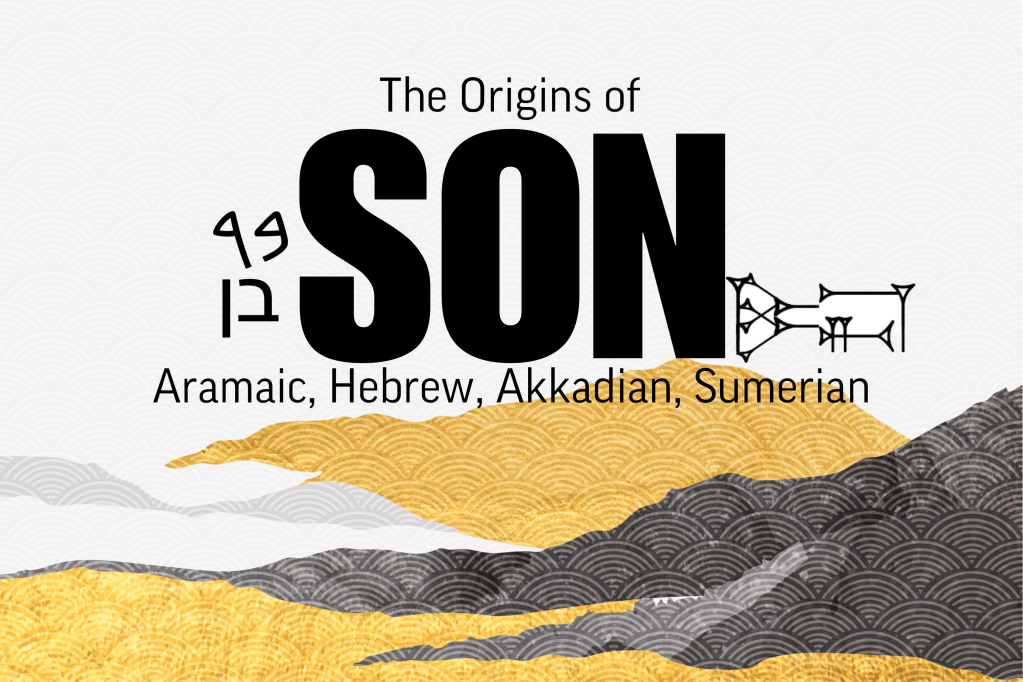
BR 𐤁𐤓 “Bir/bar” in Aramaic and BN 𐤁𐤍 “Bin/Ben” are both translated as son in english, but what are their ancient origins?
Learning Aramaic & Hebrew, it always confounded me how Hebrew uses only BN בן for son, while Aramaic uses BR 𐤁𐤓 or בר for son (singular) and BNY 𐤁𐤍𐤉 or בני for son in the construct form which is translated as sons of. Aramaic also uses the plural noun form BN’YN 𐤁𐤍𐤉𐤍 or BN’YM 𐤁𐤍𐤉𐤌 meaning sons.
BR, בר , 𐤁𐤓 (noun, masc) in Aramaic corresponds to the Akkadian word for young bull, young calf which can come from two words: buru or biru. This is kind of like the slang term for a young child in english: kid—which really means a young goat. Over the course of time, the word became concrete and greatly utilized.
BN, בן , 𐤁𐤍 (noun, masc) in Hebrew corresponds to the Akkadian verb to build, create, to engender (a child) which is: “banu” . In Aramaic the verb BNY בני , 𐤁𐤍𐤉 “Bin-ny” also, means to build, to construct or it can mean the masculine noun for an architect, builder.
The Sumerian-Old Akkadian masculine noun for son is: dumunita(h), dumu-nita [See pg 16 under “male child”]
🛸 12/11/3 🛸



Leave a Reply