
To get up to date on my claims please read:
More proof that Passover is in the fall, not spring.
All these are essential fundamentals to my claims as to why the mainstream Hebrew calendar is offset. In this article, I will add on to my claims. Let’s begin…
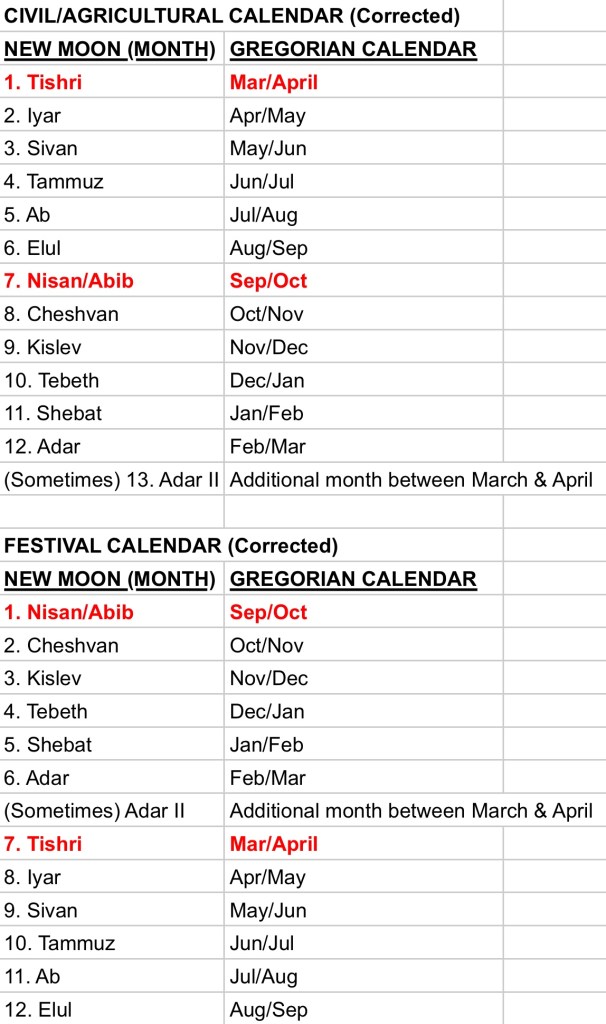
The Jews (Judaism followers) and majority of Hebrew Israelites follow 2 sets of calendars, a civil calendar and a festival calendar. Their civil calendar follows the farmer or agricultural calendar, meaning the beginning of the year starts in the springtime, and their festival calendar starts in the fall season. The problem here is that Jews and majority of Hebrew Israelites celebrate Passover which is on the new moon (month) of Nisan/Abib in the springtime, when it’s actually in the fall season.
The Jews and majority of Hebrew Israelites start their festival calendar on Nisan ניסן which is also called Abib אביב and this is correct, but as I said, they subscribe passages like these to the incorrect seasons.
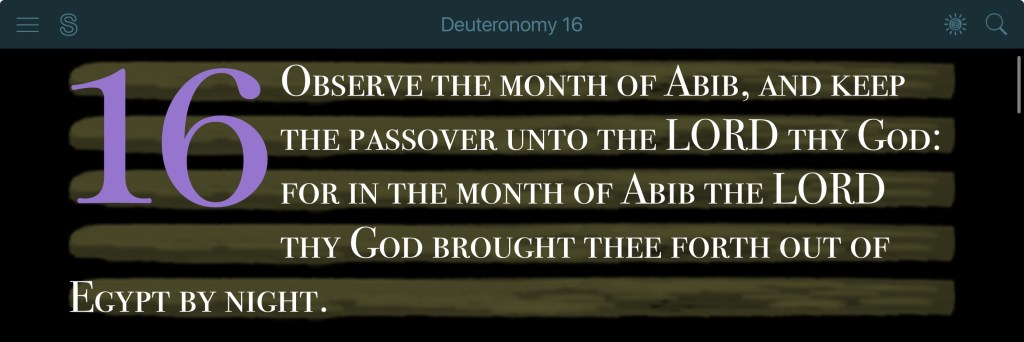
Deuteronomy 16:1 (KJV) – Observe the month of Abib, and keep the passover unto the LORD thy God: for in the month of Abib the LORD thy God brought thee forth out of Egypt by night.
The Hebrew scriptures and the King James Version are great beginner tools, but they leave out a vast amount of information provided in other manuscripts. While the Aramaic Targums are not perfect, containing exaggerations and contradictions, they still hold key information left out of the mainstream doctrine.
Genesis 7:11

בשנת שית מאה שנין לחיי נח בירחא תניינא הוא ירח מרחשון דעד כדון לא הוו מתמנן ירחיא אלהן מתשרי דהוה ריש שתא לשכלול עלמא בשבסרי יומין לירחא ביומא הדין אתבזעו כל מבועי תהומא רבא והוון בני גובריא משווין תמן בניהון וסתמין יתהון ובתר הכי חרכי שמיא אתפתחו
In the six-hundredth year of the life of Noah, in the second month, which was the month of Marchesvan, for hitherto the months had been numbered from Tishri which was the beginning of the year at the completion of the world, in the seventeenth day of the month, in that day were all the fountains of the great deep broken up. And the giants were gathered there together with their sons and perturbed them, and afterwards the windows of heaven were opened.
This is referring to the first month (new moon) of the civil/agricultural calendar, which is in the springtime, WHICH IS NOT the first month of the festival calendar (fall season).
We can also observe here in the Aramaic Targum that Tishri IS NOT in the fall season, but is in the spring time. If this isn’t convincing enough, in the next chapter solidifies it.
עוד כל יומי ארעא דרועא בתקופת תשרי וחצדא בתקופת ניסן וקורא בתקופת טבת וחומא בתקופת תמוז וקיטא וסתוא ויממי ולילי לא יתבטלון
Until all the days of the earth, sowing in the season of Tishri, and harvest in the season of Nisan, and coldness in the season of Tebeth, and warmth in the season of Tammuz, and summer and winter, and days and nights shall not fail.
Earlier in chapter 8 the Aramaic scriptures even blesses us with a number.
ונחת תיבותא בירחא שביעאה הוא ירחא דניסן בשבסרי יומין לירחא על טוורי דקדרון שום טוורא חד קרדניא ושום טוורא חד ארמיניא ותמן מתבניא קרתא דארמניא בארעא מדינחא
And the ark rested in the seventh month, which is the month of Nisan, in the seventeenth day of the month, upon the mountains of Qadron; the name of the one mountain is Qardania, and the name of the other mountain Irmenia; and there was builded the city of Armenia in the land of the east.
If this is true, then when Moses 𐤌𐤔𐤄 (Misheh) declares that Nisan or Abib is the first month of the emancipation from Mtzrym (original Egypt), and that it should be celebrated through the Passover feast, then he is talking about the 7th month of the civil/agricultural calendar, which is the 1st month of the festival calendar.
To be clear, the Passover feast, is the 7th month of the civil/agricultural calendar, which is the 1st month of the festival calendar.
Another, passage that gives weight to my claim is Genesis 8:5:
ומיא הוו אזלין וחסרין עד ירח עשיריי ירח תמוז בתמוז בחד לירחא אתחמיאו רישי טוריא
And the waters went and diminished until the tenth month, the month Tammuz. In Tammuz, in the first of the month, the heads of the mountains were seen.
If we count 10 new moons (months) from Nisan/Abib we land in the warm season of Tammuz. This is the equivalent of counting 10 months on the Gregorian calendar from September to July. Remember, to get this result, one has to switch the position of Tishri and Nisan/Abib on the civil/agricultural calendar, for example:



 MLK DUD 𐤌𐤋𐤊 𐤃𐤅𐤃
Leave a comment