BRIEF HISTORY|Where does it come from?
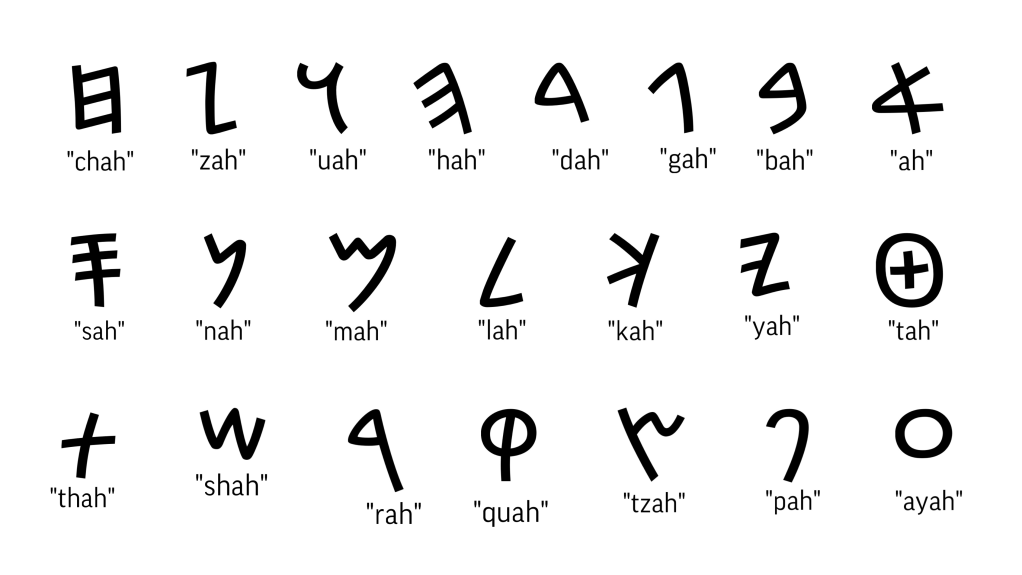
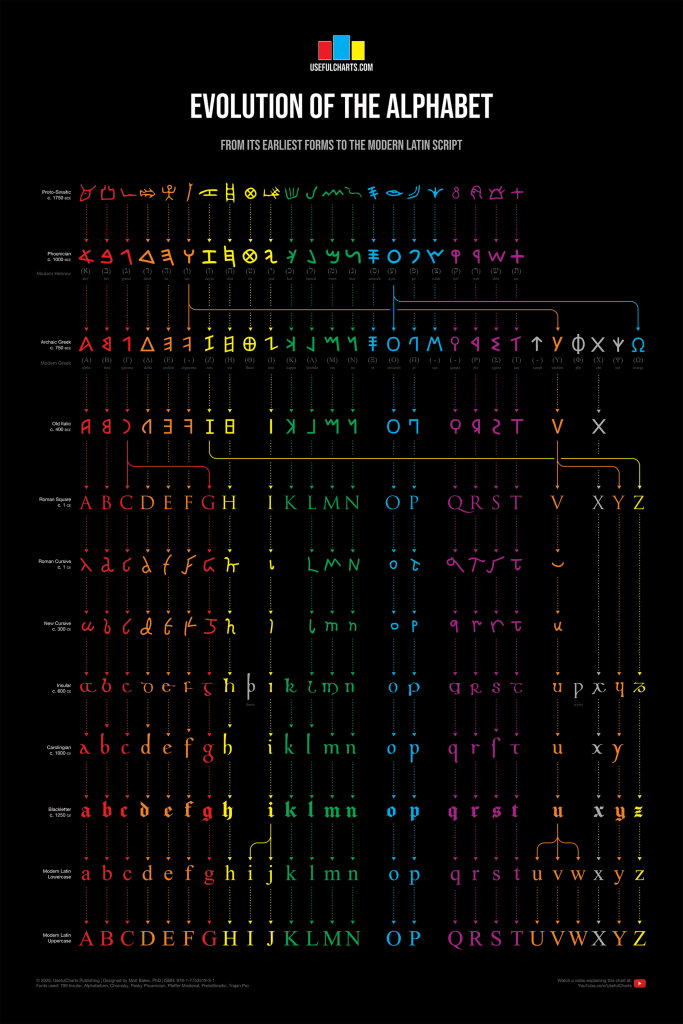
The Paleo-Hebrew script is also called the Phoenician script depending on the source you subscribe to. This script has 22 letters and derives from the Proto-Sinaitic Hebrew script or Proto-Canaanite Script.
PRONUNCIATION | How do you say it?
In the video, I have the Paleo-Hebrew script in the middle, Ashuri script (Modern Hebrew) on the right, and the Latin script on the left. Memorize the 22 letters and their corresponding partners to help you learn to read Aramaic and Hebrew texts. Make sure you say them out loud!
Pronunciation tips
- “CHah” 𐤇
Most Aramaic & Hebrew speakers will say this letter from the back of their throat, but in the dialect I teach, which is the “Raiuthy” dialect (American-Aramaic), I use the harsh “CH” sound as in “Cha-Cha-Cha”. This sound is also used by the ancient Nahuatl language, and Mayan languages such as K’iche’ (Quiché) and Yucatec Maya. This sound was used in the Americas long before the Spanish arrived. If the ancient Mayans were an older civilization before the Spanish, Latin/Greek speakers who also use the harsh “CH” sound then it makes the latter the borrowers. This gives more power to the new idea that the ancient Greeks and Romans sailed to the Americas before Christopher Colon Columbus (pg 14) —but, I digress. Down below, is an example of the letter 𐤇 or ח being pronounced by most Aramaic & Hebrew speakers.
- “Rah” 𐤓
This sound can be made with the relaxed “r” sound, the semi rolling “r” sound (midway between relaxed and rolling), or the heavy rolling sound.
- “TZah” 𐤑
This sound is the same sound when pronouncing ca”ts”, car”ts”, rats, bats, hats etc. Unlike Aramaic & Hebrew, virtually no word in English starts with this sound. Another good thing to note, is that it’s slightly distinct from the relaxed “s” sound.
- “THah” 𐤕
Pronounced with a soft “t” unlike the hard sibilant “t” 𐤈 as in “Tom” or “Take”. This sound is made by using the tip of the tongue, to the front area of the roof of your mouth, behind the teeth. Sometimes you will see the transliteration as “th” which may strike the notion that it is pronounced with the tongue between the teeth as the “th” in “teeth” or “thoughts, thorough”. Here’s a video explaining the soft “t” from another individual:
Happy pronouncing!
🛸 13/19/3 🛸


 MLK DUD 𐤌𐤋𐤊 𐤃𐤅𐤃
Leave a comment