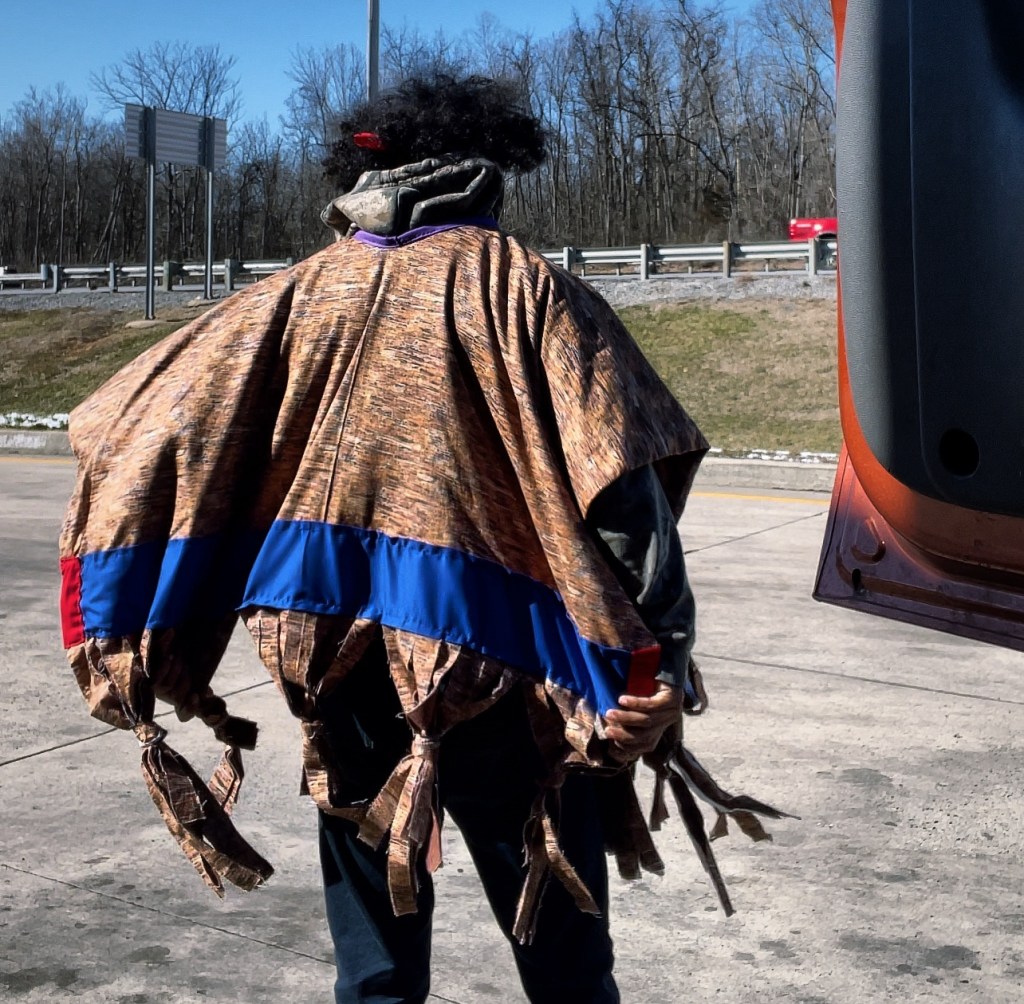
Many have seen fringes on garments, but from a biblical perspective, what did the holy ones from YSHRAL 𐤉𐤔𐤓𐤀𐤋 look like?
If you search the internet for this answer, you’ll probably come up with the mainstream Ashkenazi Jewish appeal or maybe even the mainstream Hebrew Israelite golden fringes. The question is, are these accurate? If TMH has put it inside your heart to search, then let me provide your brain with some compelling evidence on a possible alternative.
First we have to go outside of the English Bible which is translated from the Hebrew Masoretic text, which is “deemed” to be certified by the Greek Septuagint LXX and the Dead Sea Scrolls, into the Aramaic Targums. In this article, I will not focus on why I think the Aramaic Targums have deeper roots than the normal Hebrew Bible, but I will simply provide the reader with some alternative evidence worth taking a look at.
Numbers 15:38 (Masoretic Text)
דבר אל־בני ישראל ואמרת אלהם ועשו להם ציצת על־כנפי בגדיהם לדרתם ונתנו על־ציצת הכנף פתיל תכלת
Speak to the Israelite people and instruct them to make for themselves fringes on the corners of their garments throughout the ages; let them attach a cord of blue to the fringe at each corner.
https://www.sefaria.org/Numbers.15.38?lang=bi&with=all
Numbers 15:38 (Aramaic Targum of Pseudo-Jonathan)
(The “Pseudo” was added in front of Jonathan because of a printer error. In its adolescence, the printer attributed the Targum to Jonathan Ben Uzziel, and this is false. Though, Jonathan Ben Uzziel did write a Targum, his Targum is an Aramaic translation of the book of the prophets—not the Old Testament. His Targum is simply known as “Targum Jonathan”. Beware! Some websites and sources may list the “Targum Pseudo-Jonathan” as “Targum Jonathan”.)
מליל עם בני ישראל ותימר להון ויעבדין להון ציצייתא לא מן נימיא ולא מן סיסיא ולא מן גרדיא אלהן לשומהון יעבדונון ויפסקון רישי חוטיהון ויתלון בחמשת קיטרין ארבעה בגו תלתא על ארבעת אנפי גוליהון דמתעטפין בהון לדריהון ויתנון על אנפא גוליתהון שזיר דתכלא
Speak with the sons of Israel, and bid them make for themselves fringes, not of threads, nor of yarns, nor of fibres, but after a manner of their own (lesumhon) shall they make them, and shall cut off the heads of their filaments, and suspend by five ligatures, four in the midst of three, upon the four corners of their garment in which they enwrap themselves, unto their generations; and they shall put upon the edge of their robes an embroidery of hyacinth (shezir de-thikela).
https://www.sefaria.org/Targum_Jonathan_on_Numbers.15.38
(Basically) Cut 35 fringes in the front & 35 in the back (70 total). On one side take 7 fringes & tie them in a knot. Do this 5x & repeat on the other side.

Notes:
- (leshumhon) לשומהון = “their own name/fame”which is providing a sense of their own holy garment without any additives.
- ligatures. This word is translated from the Aramaic word קיטרין (Qytryn) “Qeet-reen” meaning “knots”.
- hyacinth. This site that I’ve cited from translates תכלא as hyacinth 🪻 and some other sites claim it to mean purple thread processed from the dye of a murex snail 🐌 . This is false, for two reasons. Number one, תכלא (Thkla, Thklta) corresponds to a more ancient word in Akkadian which is “takiltu”:
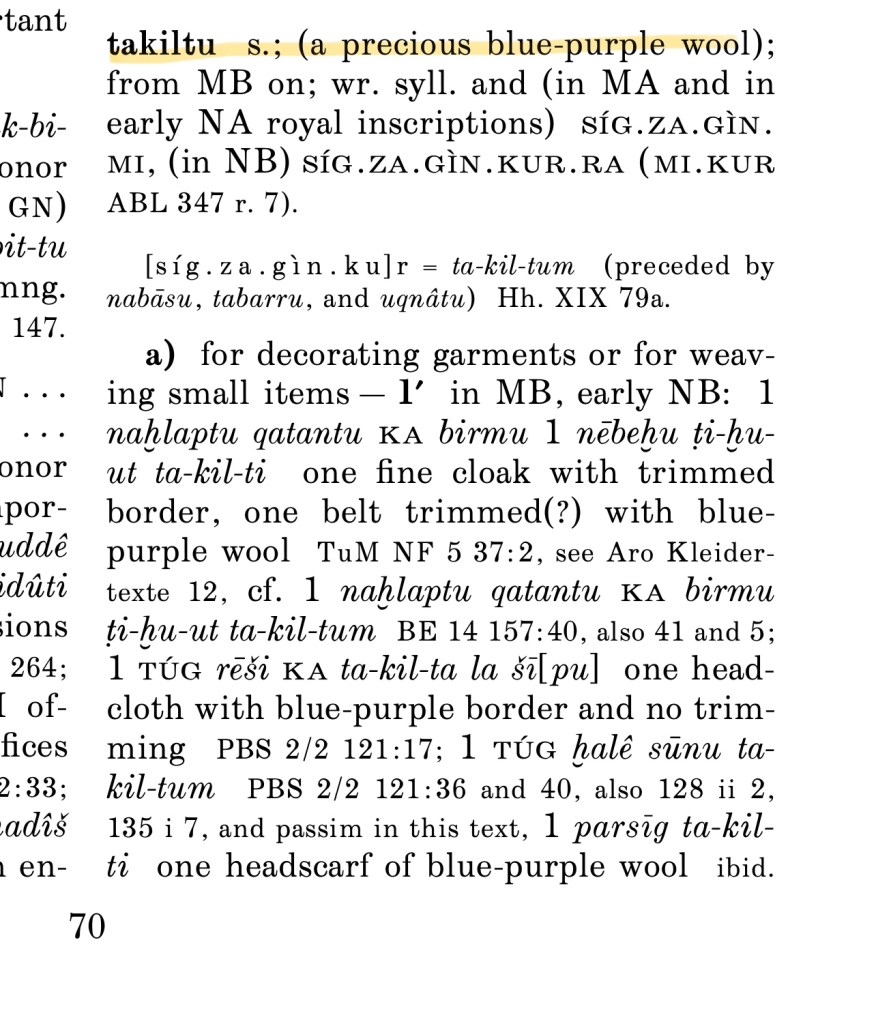
Now, there are different shades of blue and Blue-Purple is one of them. This blue would then have to be a distinct rich blue but separate from purple. The reason I say this is because there is another name only used for purple in Aramaic, Hebrew, Akkadian, which is ARGMN ארגמן. One of three important colors TMH told us to use when constructing the tabernacle and the priestly Ephod found in the book of Exodus (see Exodus 26:1, 26:31, 26:36, 27;16 for the tabernacle and Exodus 28:5-6 for the Ephod). The three important colors are Red (Scarlett), Blue, and Purple. If you combine red and blue together it makes…yea, you guessed it. Second of all, it wouldn’t have been a murex sea snail that produced this color like mainstream scholars suggest, because according to the dietary laws of bugs and insects in Leviticus 11:29-30 they are unclean.
Leviticus 11:29 These also shall be unclean unto you among the creeping things that creep upon the earth; the weasel, and the mouse, and the tortoise after his kind,
Leviticus 11:30 And the ferret, and the chameleon, and the lizard, and the snail, and the mole.
🛸 12/14/3 🛸


 MLK DUD 𐤌𐤋𐤊 𐤃𐤅𐤃
Leave a comment