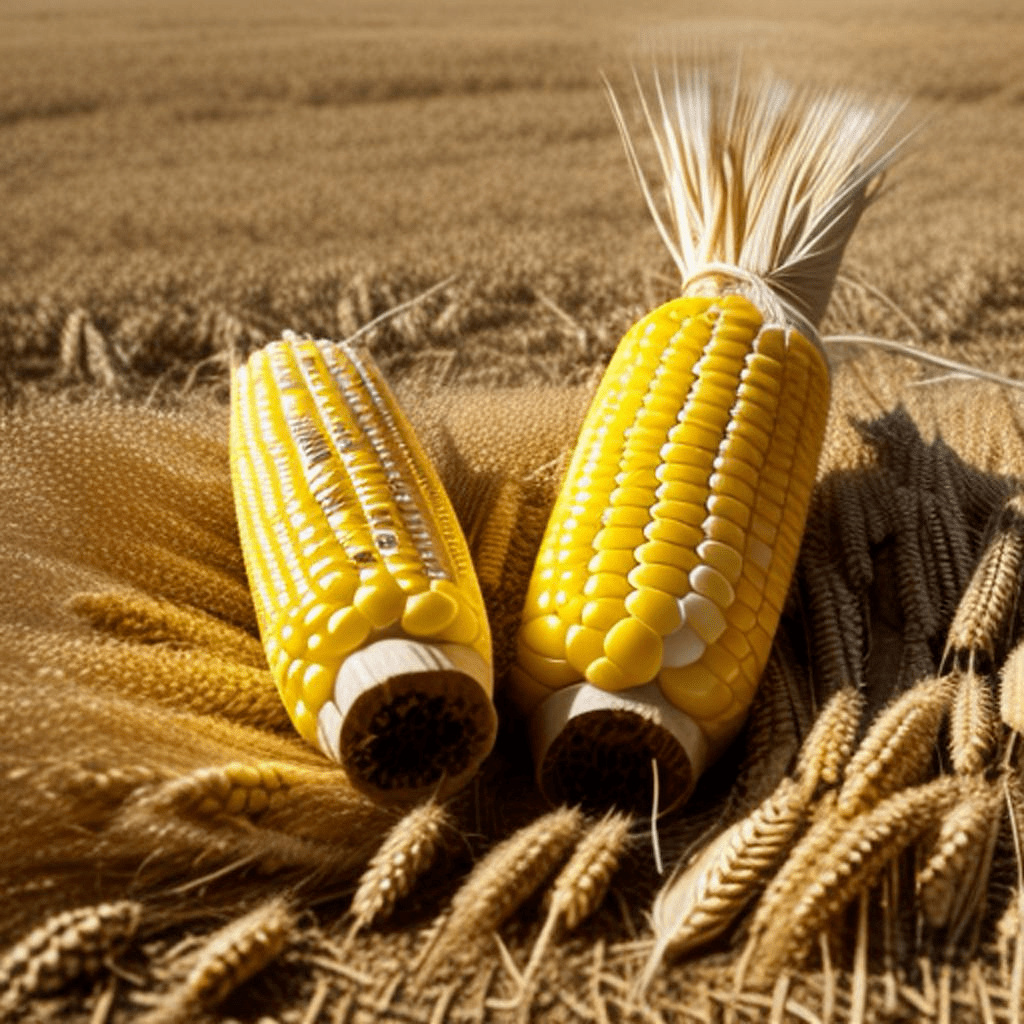
“Corn” and “Wheat” seem to be umbrella terms for a wide variety of grains in the english King James Version of the pentateuch. This is not limited to only the KJV, but as well as other english translations depending on who translated the pentateuch from different languages (i.e. Hebrew, Aramaic, Greek). Corn and wheat are also used interchangeably with the word “grain”. The problem rests in the translators who failed to do a good job or perhaps deliberately mistranslated the text for the purposes of hidden agendas. Regardless of the case, if the scriptures are indeed referring to the actual crops themselves (Corn/Maize, Wheat/Common wheat) — without using them as a generic term (such as: “Grain”) — then we run into a third problem—dietary laws.
Disclaimer: If you have been following me; you’re aware that I associate the promised land of the true YSHRAL 𐤉𐤔𐤓𐤀𐤋 with North America. Specifically, in the Utah region of the United States. My goal is to research the corrupted scriptures and do my best to restore the true meaning of the context.
Both Indian corn (maize) (Zea mays) and Common Wheat (Triticum aestivum) are cultivated hybrid crops; they couldn’t have been created without human intervention. Zea Mays, Maize or Indian corn, is indigenous to the Americas and derives from the fusion of the wild plant Teosinte (Zea mays ssp. parviglumis) and Zea diploperennis. Common wheat is a tad bit trickier because the exact details of how it was created are not fully known. It is believed to have originated from hybridization events involving several wild grass species, including emmer wheat (Triticum dicoccum) and a wild grass known as Aegilops tauschii. For thousands of years, indigenous peoples across the earth brought stabilization to their economies and civilizations by creating staples suitable for human consumption, trade, and commerce.
A mind that doesn’t completely immerse itself in the fluid manners and ways of the Laws of TMH via Auryytha 𐤀𐤅𐤓𐤉𐤉𐤕𐤀 (Aramaic) or Thureh 𐤕𐤄𐤅𐤓𐤄 (Hebrew)—does not see a problem with Crossbreeds, Hybrids & GMOs According to 𐤉𐤄𐤅𐤄 (YHWH) . Trust me, my mind was one of them. I’ve touched on this already in another article, which I provided the link to above. The article contains scriptures supporting my claim, so I won’t get into it too much here.
What’s more important is to take it with a grain of salt when you see “Corn” or “Wheat” translated from archaic scriptures of the pentateuch into english. Exodus 9:31-32 provides us with a little insight on Indian Corn (Maize, Zea Mays) and Common Wheat (Triticum aestivum) not being an important crop of Mtzr’yn (‘ym).
SCRIPTURE
Aramaic Targum Pseudo-Jonathan—Exodus 9:31
וכתנא וסרתא לקון ארום סרתא הוות בסירא וכיתנא עבד פוקלין
(Ashuri Script)
𐤅𐤊𐤕𐤍𐤀 𐤅𐤎𐤓𐤕𐤀 𐤋𐤒𐤅𐤍 𐤀𐤓𐤅𐤌 𐤎𐤓𐤕𐤀 𐤄𐤅𐤅𐤕 𐤁𐤎𐤉𐤓𐤀 𐤅𐤊𐤉𐤕𐤍𐤀 𐤏𐤁𐤃 𐤐𐤅𐤒𐤋𐤉𐤍
(Paleo Hebrew/Phonecian Script)
Literal translation: And the flax, and the barley were smitten because, the barley was too early and the flax made bud
Exodus 9:32
וחייטיא וכונתיא לא לקון ארום לקישן הינין
𐤅𐤇𐤉𐤉𐤈𐤉𐤀 𐤅𐤊𐤅𐤍𐤕𐤉𐤀 𐤋𐤀 𐤋𐤓𐤅𐤍 𐤀𐤓𐤅𐤌 𐤋𐤒𐤉𐤔𐤍 𐤄𐤉𐤍𐤉𐤍
Literal translation: and the wheat and the spelt not smitten because they’re late-seasoned
ANALYSIS
Indian Corn (Maize, Zea Mays), in its varieties of hybrid breeds, are one of the most important staple crop across the world, so….why isn’t it mentioned here? Zea Mays is also a late-seasoned harvested crop that is best gleaned from late August to early October, so it seems very odd not to mention it in these two verses. Perhaps corn can be used in english as a general term used for grain?
ETYMOLOGY
The word “Corn” as a noun has 4 definitions according to Etymonline.com and even though it has it’s theories tracing back to Proto-Germanic (estimated 500 BCE-500 CE); I will show you the word is actually traced back to Old Aramaic (estimated 900 BCE-500 BCE).
1. Grain (Cereal grain)
2. Maize (Yellow corn, Indian corn)
3. Hardening or thickening of the skin
4. Horn
Grain
Corn (Old English) from Kurnam (Proto-Germanic); Korn (Old Frisian, Old Saxon); Coren (Middle dutch); Korn (German Old Norse), Kaurn (Gothic), from PIE root *gre-no- “grain.”
Maize
“…maize cultivation was already present in Europe, Africa, and Asia many centuries before Columbus was even born. The antiquity of maize in Europe goes back at least to Roman times.
Discovering the Mysteries of Ancient America by Frank Joseph (Chapter 4, Pg 139)
Maize was already present in Roman times but called by different names other than corn.
It has been restricted to the indigenous maize in America (c. 1600, originally Indian corn, but the adjective was dropped), usually “wheat” in England, “oats” in Scotland and Ireland, while Korn means “rye” in parts of Germany.
“Hardening or thickening of skin” or “Horn”
early 15c., corne, from Old French corne (13c.) “horn (of an animal),” later “a corn on the foot,” from Latin cornu “horn of an animal,” from PIE root *ker- (1) “horn; head
Etymology won’t tell you this!
Aramaic Source of the english word:
“Corn”
qrn, 𐤒𐤓𐤍, קרן
Pronunciation: “qirn” or “kirn”
Definitions: Horn, Corner (Corn-er), Angle, Capital funds or Intrinsic value
But no, this word is not used in scripture for corn.
The Aramaic language is older than every language listed above, but etymological sources will most likely not list it. You can view the source of my information by clicking here:

🛸 12/364/2 🛸




 MLK DUD 𐤌𐤋𐤊 𐤃𐤅𐤃
Leave a comment