In this article, I will do my best to give the reader a gist of when and where the language of the Hebrew Israelites changed from Eastern Old Aramaic/Ancient Chaldean to what it became. Providing that the later dialects of Eastern Aramaic, Western Aramaic, Jewish Palestinian Aramaic, Late Jewish Literary Aramaic, Jewish Babylonian Aramaic, Midrash Talmudic Hebrew, Biblical Hebrew, Yiddish Hebrew and Modern Hebrew etc. are not the original tongue of the Israelites and Moses, the greatest prophet in which the Laws & Commandments were orally given by God 𐤀𐤋𐤄𐤉𐤍 spoke. Though, they are very similar in language, my goal is to give progress to Zephaniah 3:9. Indeed, the false Messiah Simon Bar Kokhba and his revolt between 132-136 CE might have brought the so called “Hebrew language” to the table again, but it was still was not the same language God wrote on the tablets and provided Moses with.
BEFORE THE EXODUS
- Noah 𐤍𐤇 had three sons: 𐤔𐤌 Shem, 𐤇𐤌 Ham, 𐤉𐤐𐤕 Japeth (Genesis 5:32)
- The sons of 𐤇𐤌 (“Chih-m” but wrote and pronounced as “Ham”) had 4 sons but I will only list 3:
- Kush 𐤊𐤅𐤔 = The father of the Ethiopian (Side note: English translations of the Aramaic and Hebrew scriptures will write “Ethiopian” instead)
- Mtzr’yn 𐤌𐤑𐤓𐤉𐤍 = The father of the Egyptian (Side note: English translations of the Aramaic and Hebrew scriptures will write “Egyptian” instead)
- Knayn 𐤊𐤍𐤏𐤍 = The father of the Canaanites
- All of these people spoke a common language but, during the Tower of Babel period in Southern Mesopotamia, God scattered the language into plurality
- If the whole world spoke one language which was Sumerian, and God scattered the languages, this means that different dialects of Sumerian started to emerge (Genesis 11:4-9)
- Akkadian is a dialect of Sumerian
- Eastern Aramaic 𐤀𐤓𐤌𐤉𐤀 and Chaldean are derivatives of Akkadian
- Chaldean and Eastern Aramaic are closely related in language; sometimes the terms are used interchangeably
- Abraham 𐤀𐤁𐤓𐤄𐤌 came from the land of 𐤀𐤅𐤓 AUR (Light) in the Chaldean territory of Southern Mesopotamia speaking Eastern Aramaic (Chaldean), to create a people who started speaking a dialect of Eastern Aramaic called 𐤉𐤄𐤅𐤃𐤉 EEhudy (Language of the Judeans also called Hebrew)
- Abraham was able to communicate with the Canaanites, the Mtzr’yn (Egyptians), and the Athury (Assyrians) which again, all spoke derivatives of Sumerian. Scripture does not specify if Abraham used an interpreter or not
- Abraham did not want his son Isaac to take after the customs of the Canaanites so he told his servant to go to his homeland and obtain a wife (Rebecca) for his son
- Issac tells his son Jacob (Father of the Israelites) to do the same
- Jacob’s son Yhudh (Judah) proselyted a Canaanite Woman (Tamar) and she became his wife and bore children
- Jacob’s youngest son at the time, Joseph, became a Prince of Mtzr’yn (Egypt), invited his family to Mtzr’yn during a famine where clearly the Israelites spoke a different language than Mtzr’yn (Genesis 42:23). Joseph toys with his brothers by using an interpreter even though he understood them
- Side note: The language of Mtzr’yn must have had traces of Sumerian and Akkadian in it for the inhabitants to communicate with the 𐤉𐤔𐤓𐤀𐤋𐤉 YSHRALY (Israelites)
- Moses was raised in the royal palace of Mtzr’yn and spoke both languages
AFTER THE EXODUS
- With the help of 𐤉𐤄𐤅𐤄, Moses organized the laws and commandments; shared them orally and written, with the same language of his forefathers (Jacob, Isaac, Abraham).
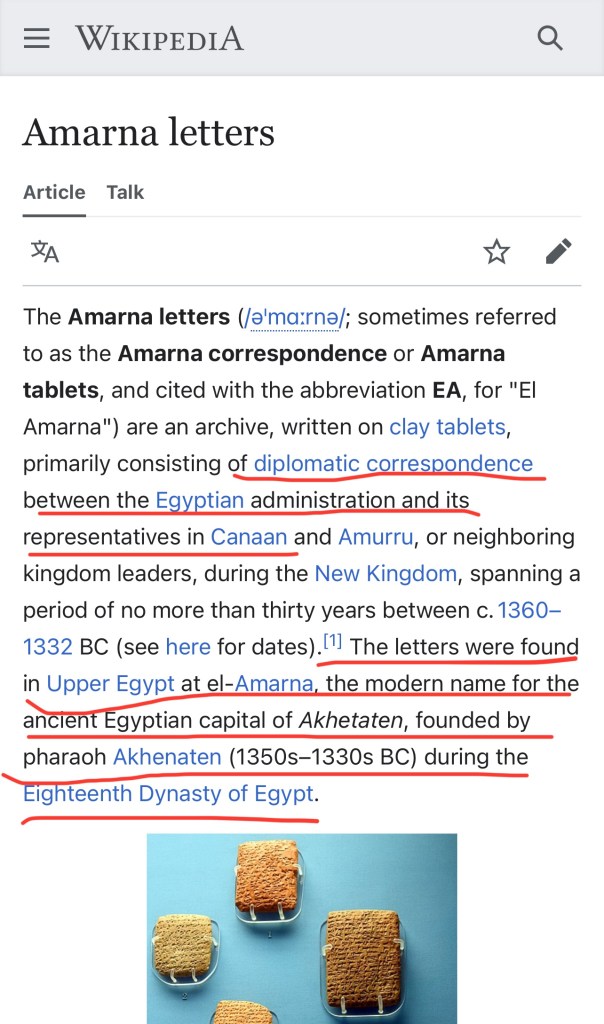
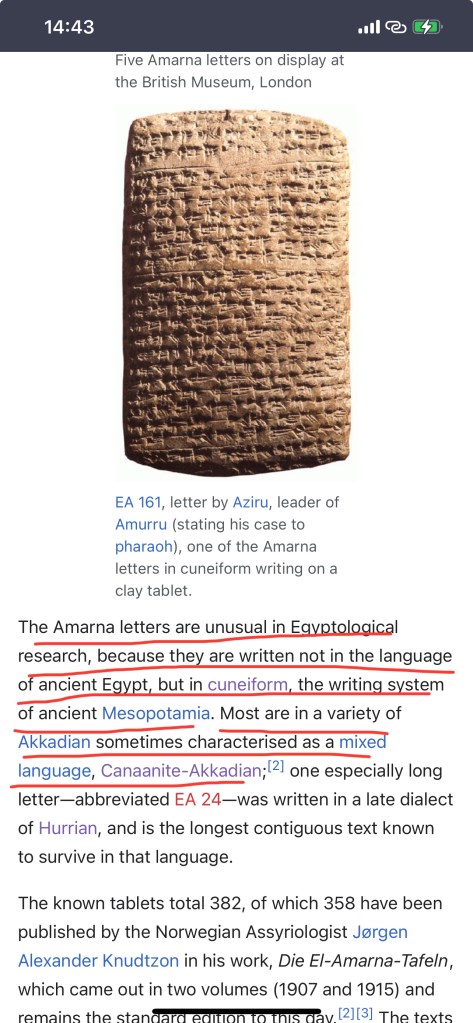
- After the Exodus, the language of the Israelites (Eastern Aramaic, Chaldean) started corrupting due to forbiddingly intermingling with the Canaanites (Canaano-Akkadian language) (Joshua 15, 17:13-18, Judges 1-3)
- The Canaanite languages, sometimes referred to as Canaanite dialects, are one of three subgroups of the Northwest Semitic languages, the others being Aramaic and Amorite. These closely related languages originate in the Levant and Mesopotamia, and were spoken by the ancient Semitic-speaking peoples. The Canaanites are broadly defined to include the Hebrews (including Israelites, Judeans and Samaritans), Amalekites, Ammonites, Amorites, Edomites, Ekronites, Hyksos, Phoenicians (including the Carthaginians), Moabites, Suteans and sometimes the Ugarites. – https://en.m.wikipedia.org/wiki/Canaanite_languages
ויאמר אליקים בן־חלקיהו ושבנה ויואח אל־רבשקה דבר־נא אל־עבדיך ארמית כי שמעים אנחנו ואל־תדבר עמנו יהודית באזני העם אשר על־החמה
Eliakim son of Hilkiah, Shebna, and Joah replied to the Rabshakeh, “Please, speak to your servants in Aramaic, for we understand it; do not speak to us in Judean in the hearing of the people on the wall.”
2nd Kings 18:26 | Sefaria.org
Side note: Judean = Hebrew language
- Rabshakeh was an Assyrian from the Assyrian army that spoke both Eastern Aramaic and the new Judean language of the Hebrew Israelites
- Eliakim, Shebna, and Joah served the Israelite King Hezekiah (though, in this part of the scripture were bestowing kindness unto Rabshakeh) and, only knew the Eastern Aramaic language
- Side note: In the English Bible, the first time the word “language” appears is when mentioning the Tower of Babel story, and the second time is the scripture above in 2nd Kings
THE NEXT EXODUS
- If 𐤉𐤄𐤅𐤄 changed the one world language because of their evil and arrogance towards him, then I have faith that he will bring the world back together under a Holy language that he wants us to serve him with. In addition, it doesn’t have to be Sumerian since majority of the speakers didn’t serve him with that language—except for Noah and his sons. Let me sort of reiterate by saying; returning back to the language in which God wrote on the tablets is ideal. Re-constructing the original Holy tongue will be a difficult task, but I thank 𐤉𐤄𐤅𐤄 for providing the Chicago Assyrian Dictionary (CAD), along with the Comprehensive Aramaic Lexicon (CAL), and the wonderful english translations of the Aramaic Targums by Sefaria.org.
ARAMAIC TARGUM OF JONATHAN:
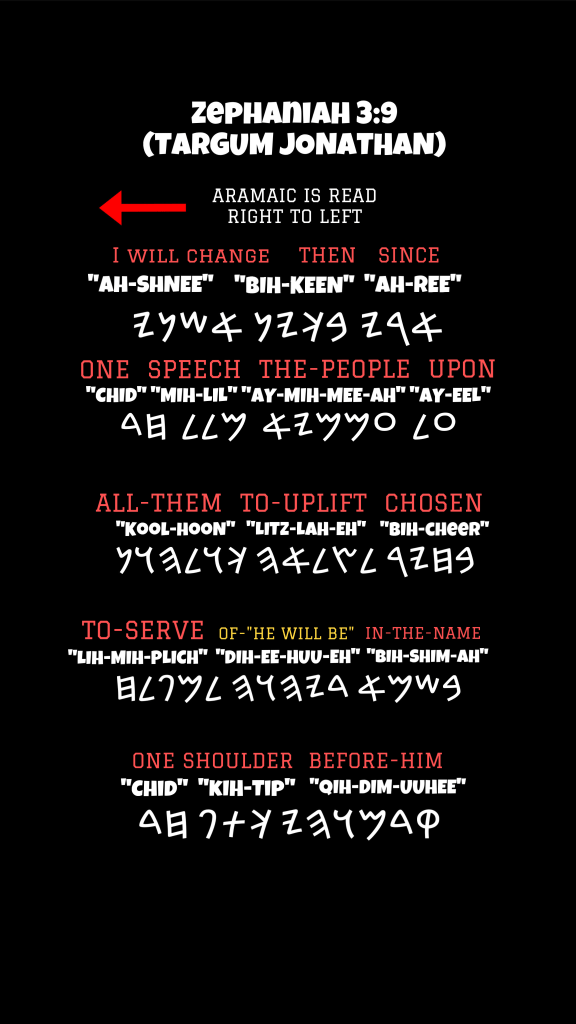
in the Targum of Jonathan translated in English
by: MLK DUD
Zephaniah 3:9 (Aramaic Targum of Jonathan, Literal English Translation) :
Since then, I will change upon the people, speech one chosen to uplift, all of them, in the name of HE WILL BE (𐤉𐤄𐤅𐤄). To serve before home him, one shoulder.
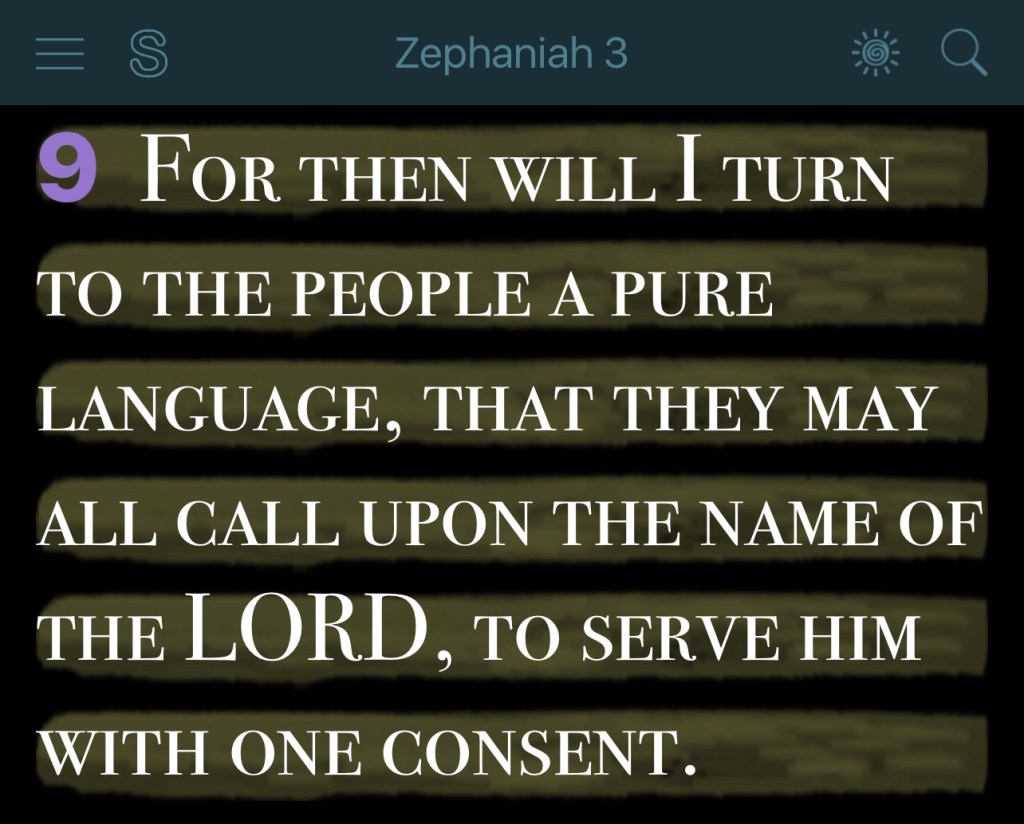
KING JAMES VERSION:
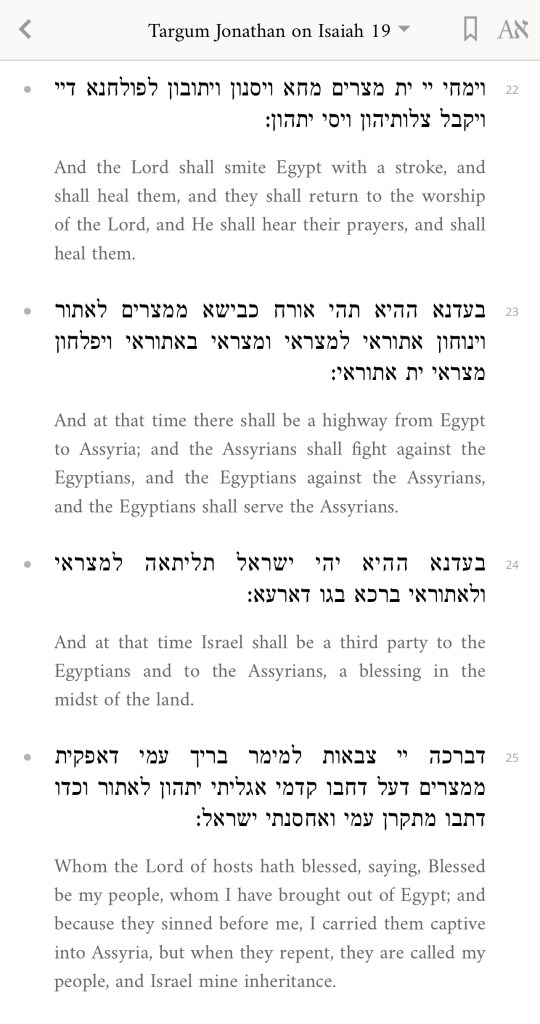
- Now, wars will be stopped in the world because God will restore his Kingdom that practices his righteous law using Aramaic, the median of all languages, that is led by a remnant of Israelites
Isaiah 19:23 – In that day shall there be a highway out of Egypt to Assyria, and the Assyrian shall come into Egypt, and the Egyptian into Assyria, and the Egyptians shall serve with the Assyrians.
Isaiah 19:24 – In that day shall Israel be the third with Egypt and with Assyria, even a blessing in the midst of the land:
Isaiah 19:25 – Whom the LORD of hosts shall bless, saying, Blessed be Egypt my people, and Assyria the work of my hands, and Israel mine inheritance.
King James Version
MISCELLANEOUS

Grammar Section
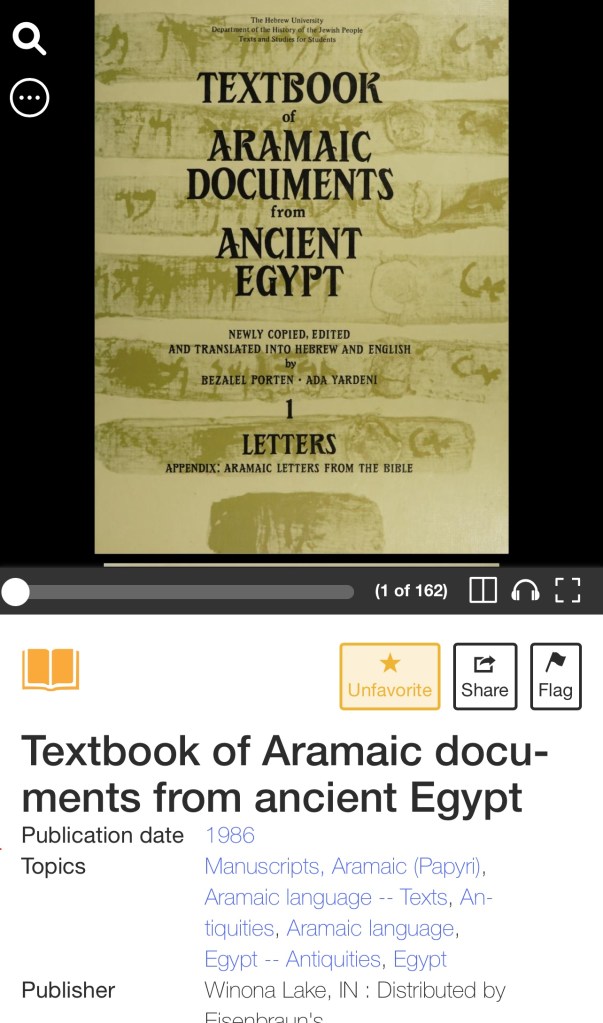
https://archive.org/details/textbookofaramai0001unse
- Other than Hebrew; Arabic, Greek/Latin, Spanish, German, Hindi, English, even Chinese all have traces of Aramaic, Akkadian, Sumerian in their languages
- Aramaic itself, is not the oldest language but, it makes a great median for everyone to meet in the middle. Best of all, we can find the Law of 𐤉𐤄𐤅𐤄 inside the Aramaic Targums
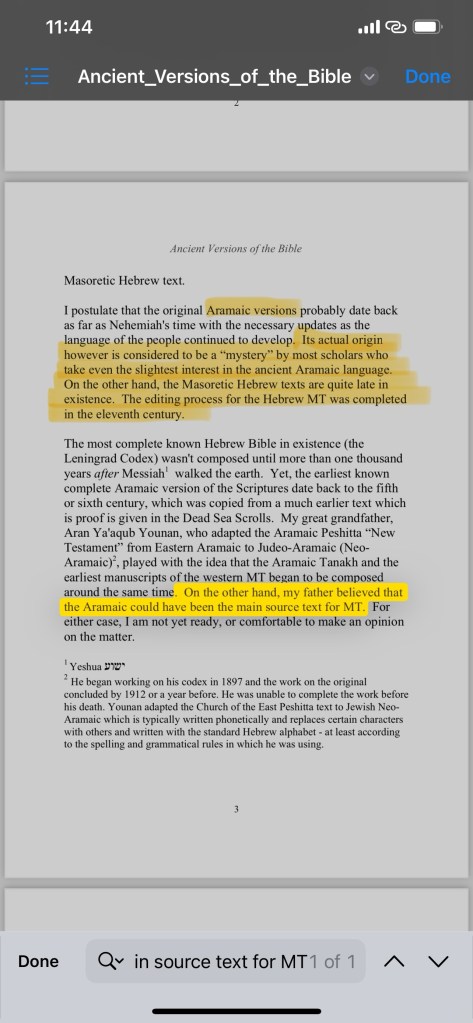
- This person suggests that Ancient Aramaic texts are actually the source of the Masoretic Text (MT) which is the foundation of the Hebrew Bible, King James Version
10/312/2



 MLK DUD 𐤌𐤋𐤊 𐤃𐤅𐤃
Leave a comment