
Before I entered into the worlds of Hebrew and Aramaic—at least in this lifetime—I only knew מצרים Mtzrym as “Egypt” and “Kemet” (kmt). As I started exploring in these worlds, I found that the definition of 𐤌𐤑𐤓𐤌 (Paleo-Hebrew) or מצרים means quite a few things, such as: Egypt; Narrow; Pass; Distress. If you break the word into parts (e.g. Mtzr or מצר/ 𐤌𐤑𐤓) and leave out the plural ym or 𐤉𐤌/ים then you will get the following definitions:

Comprehensive Aramaic Lexicon (CAL)
The -מ (M) prefix from מצרים (Mtzrym) is a preposition meaning “from”, and the צר (tzr) means: distress; enemies; Old Aramaic (OA): man.
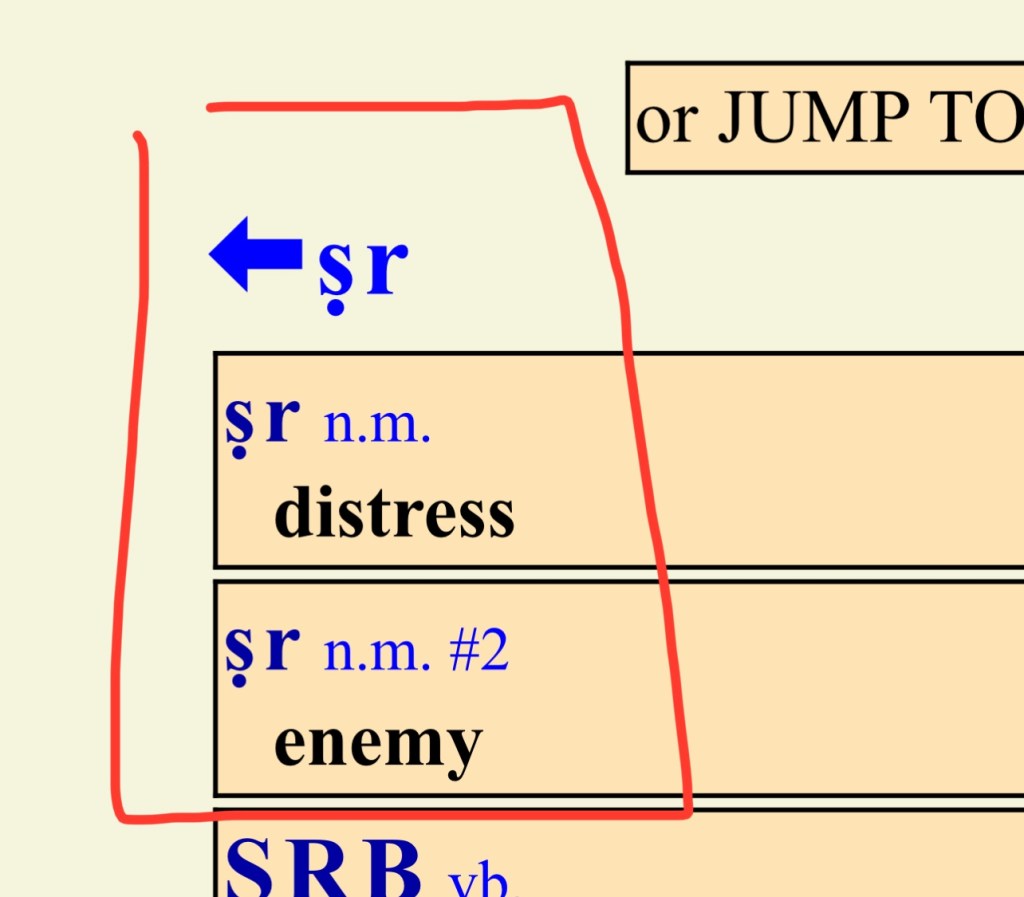
Comprehensive Aramaic Lexicon (CAL)
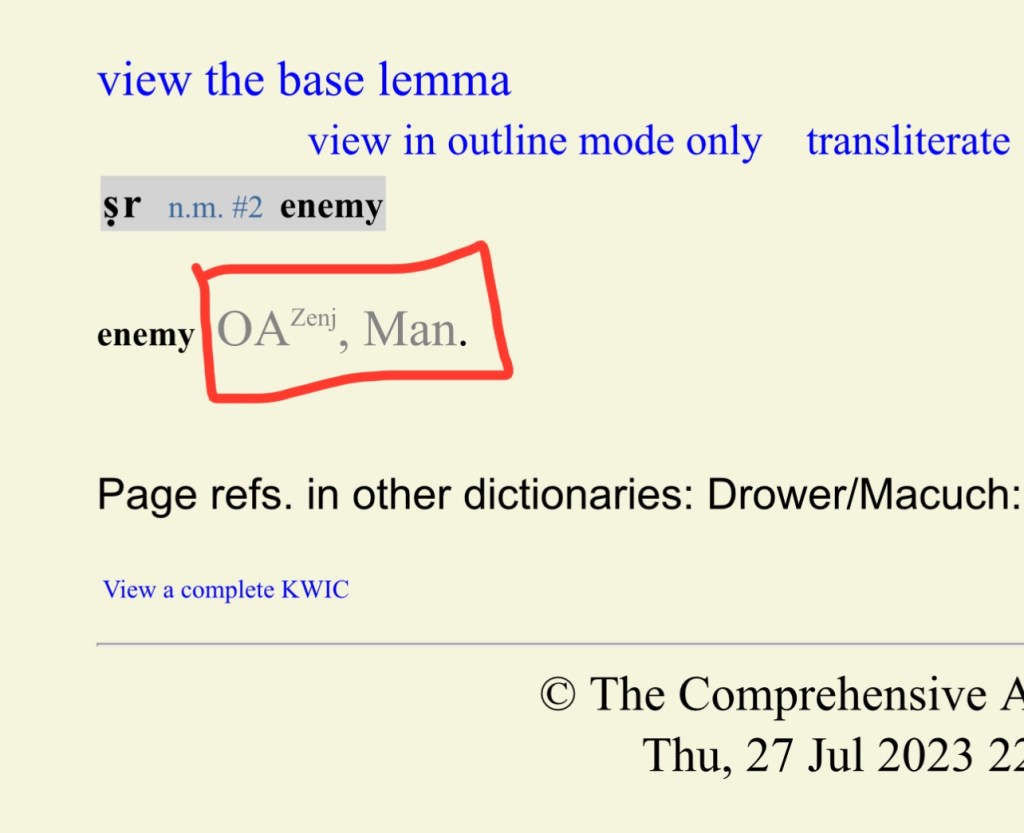
Note: the “ṣ” letter that you see in the above images is a transliteration of the Aramaic/Hebrew letter “צ” which is a consolidation of the letters “tz”. If you’re wondering how to pronounce this sound, then check out the YouTube video below.
If we try and translate this word just by using the information so far in this article, we would get something on the lines of: From distress; from enemies; from a borders/boundaries; from men etc.
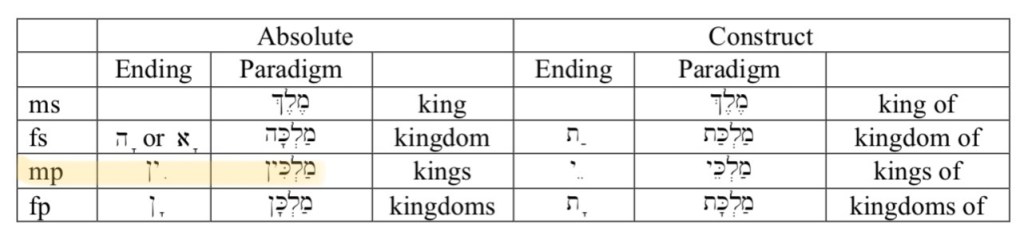
Even though, there are some respectable definitions; in my mind, I can’t imagine a nation calling themselves a name with such bad connotations, unless they were an ancient giant rock or rap band or something like that. This outcome obviously didn’t sit well with me, especially when I’ve read Isaiah 19:25 in both the Masoretic text and Targum Jonathan. In the Aramaic Peshitta Tanakh (a Christian Targum) we find מצרים (Mtzrym) with an alternate spelling; switching out the plural ending ימ– (ym) for ין– (yn). This preservation of an archaic plural form in Aramaic held by the Syriac church is great news, because this allows us to differentiate between both languages. To be fair, the other Aramaic Targums have various words with plural ending ין- (yn), but not for Mtzr’ym.
Which plural form is more ancient? That’s seems to be another topic and besides the point that I may elaborate on in another article.

Basic Grammar of the
Aramaic of the Old Testament
by:
John Pappas
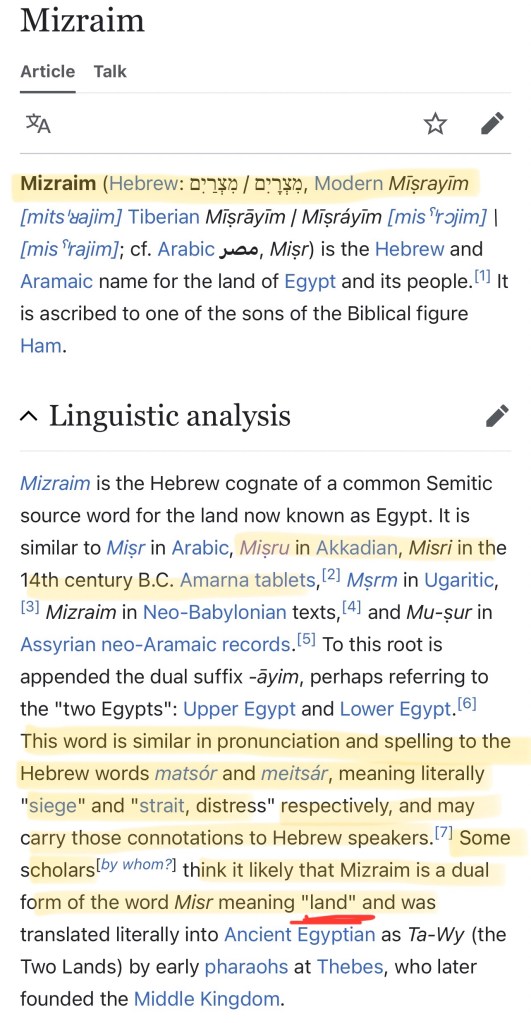
This word stretches back further into a parent language of Aramaic & Hebrew called Akkadian. If you look closer you can seen in the Armana tablets (Egyptian tablets) they call themselves Misri. Before I carry on with that great insight, I just want to reiterate what is highlighted:
This word is similar in pronunciation and spelling to the Hebrew words matsór and meitsár, meaning literally “siege” and “strait, distress” respectively, and may carry those connotations to Hebrew speakers.[7]
“Mizraim” in Wikipedia
Note: Modern Hebrew speakers pronounce ancient words differently due to a newer phenomenon called dagesh/niqqud which are not original to the Aramaic/Hebrew texts predating the Masoretes. They were added to the biblical texts at a later time resulting in different dialects.
Let’s focus on Akkadian since it has roots in the oldest language on earth—as far as we know it—called Sumerian. The Sumerian language was used during the construction of the Tower Of Babel in Babylon, when the whole world spoke one tongue. This was before GOD scattered the peoples by causing them to have diverse speech (see. Genesis 11:1-9).
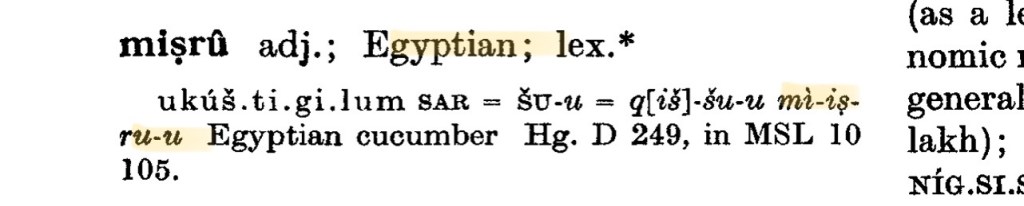
Vol. M, Part 2
Now that we know Akkadian is closer to Sumerian than the Egyptian language is, let’s ride those coat tails into the next segment.
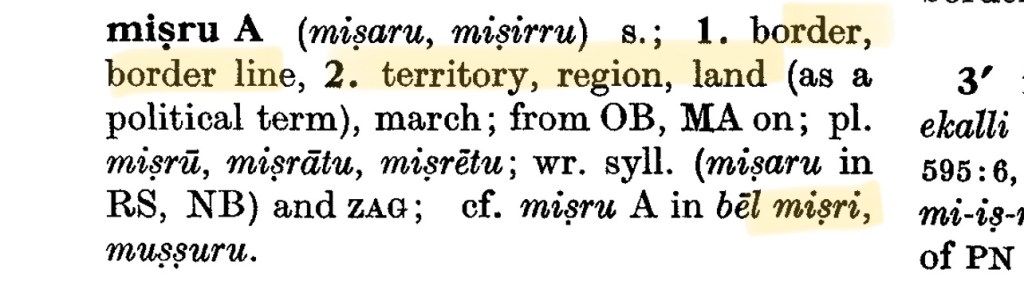
Vol. M, Part 2
In the Chicago Assyrian Dictionary, in which took 90 years to publish, it’s a little more believable that the terms provided in the screenshot above are accurate; if not, close to it. When translating this back into the Aramaic language we cannot forget that they’ve added a plural ending to the definition.
I truly don’t know where or why Hebrew & Aramaic speakers have extracted “enemies” out of “Mtzr’ym/Mtzr’yn“. Even if one was to say that “tzr” as a single word means “enemies”. Below is a screenshot of a couple examples of how this word is used in the Chicago Assyrian Dictionary.
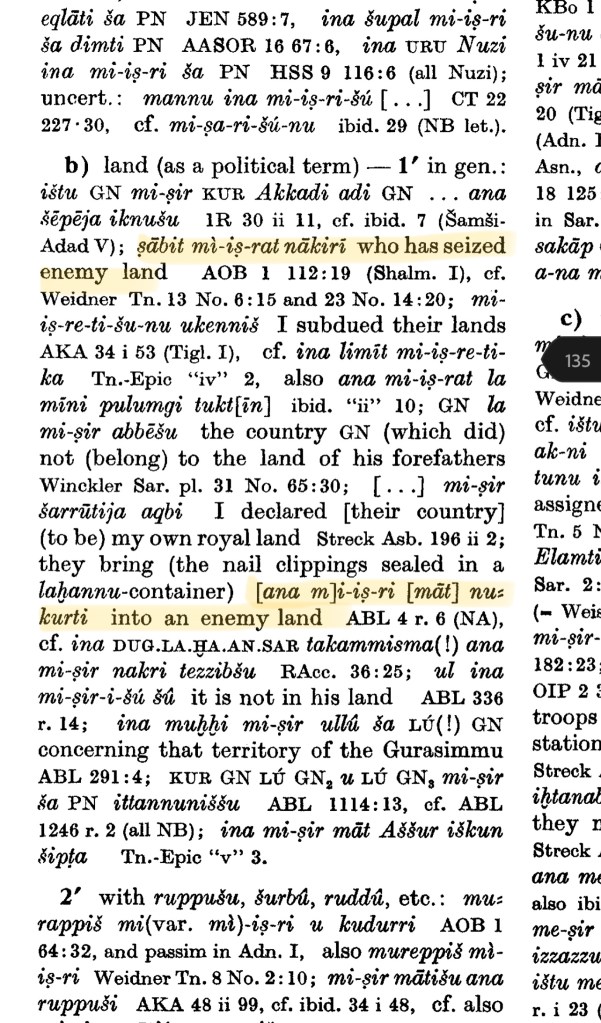
Vol. M, Part 2

In this first example, we see miṣru in a genitive construction form. We also see that nākirí means “enemy”.

In the second example, in a similar Assyrian language, we find another variant of this word which almost matches up with what the people of Egypt called themselves in the 14th century B.C Armana Tablets (see. Wikipedia screenshot above). Again, this word is separated from nukurti “enemy”.
In the research provided in this article, it gives me a personal sense of ease when following the laws and commandments of 𐤄𐤅𐤀 𐤃𐤅𐤉𐤍𐤀 𐤅𐤏𐤕𐤉𐤃 Hua D’Huyna U’aytyd (He Who Is/Exists And Ready/Prepared) due to the following scripture:
לא תרחקון אדומאה דאתי לאתגיירא ארום אחוכון הוא לא תרחקין מצראה דאתי לאתגיירא ארום דיירון הויתון בארעהון
You shall not abhor an Edomite when he cometh to be a proselyte, for he is your brother; nor shall you abhor a Mizraite, because you were dwellers in their land.
Deuteronomy 23:8 (Targum Pseudo-Jonathan) via Sefaria.org
Deuteronomy 23:7 Thou shalt not abhor an Edomite; for he is thy brother: thou shalt not abhor an Egyptian; because thou wast a stranger in his land.
Deuteronomy 23:7 (King James Version)


 MLK DUD 𐤌𐤋𐤊 𐤃𐤅𐤃
Leave a comment